

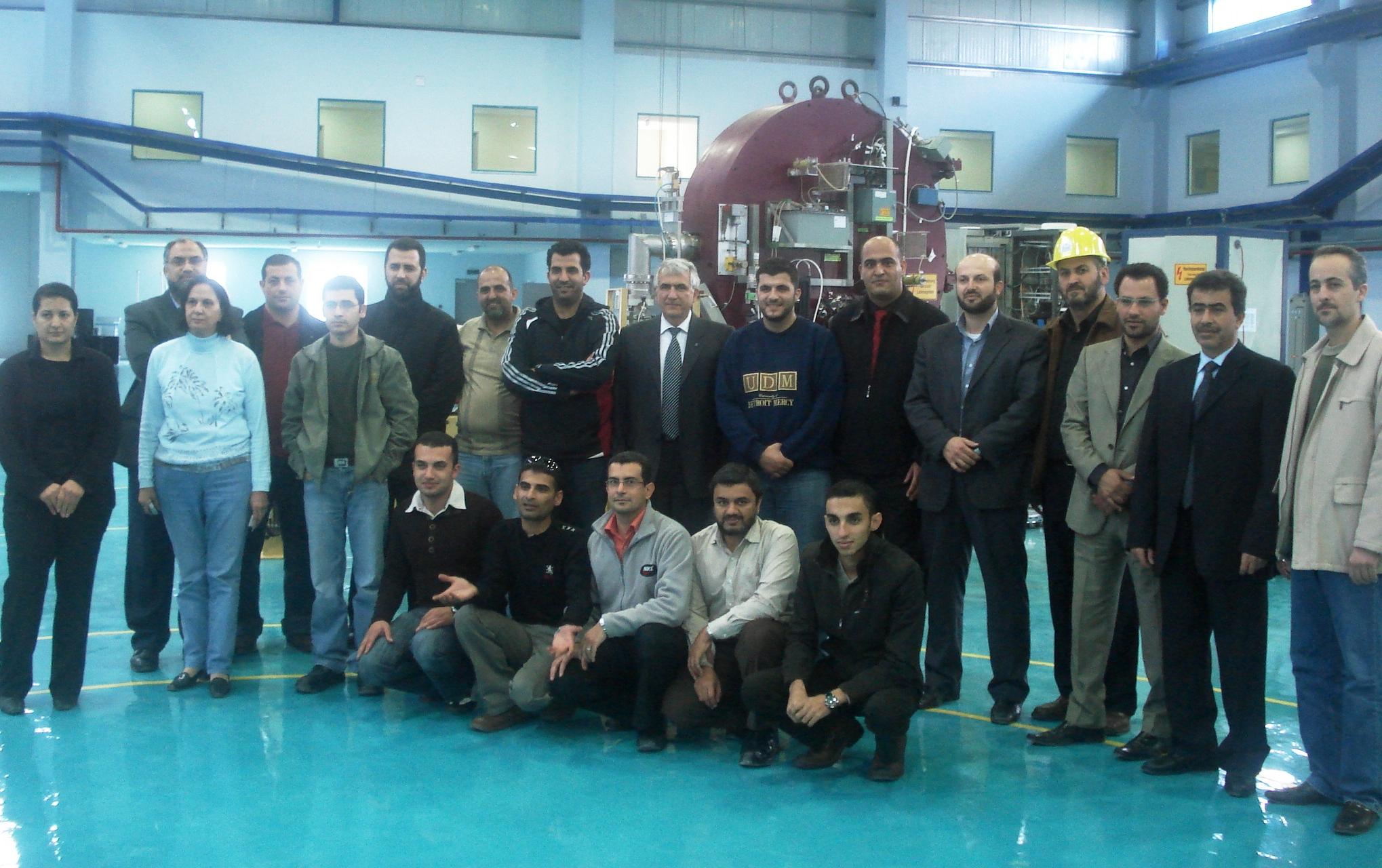
On 14th of July 2009 at 00:35 AM the first electron beam has been injected from SESAME Microtron, the pre-injector of the future SESAME (Synchrotron light for Experimental Science and Applications in the Middle East) machine.
Press Office
The SESAME microtron, which was previously in use at BESSY I but has been refurbished and upgraded, accelerated a beam to the full energy of 22.5 MeV on 14 July 2009 while temporally installed in the SESAME hall.
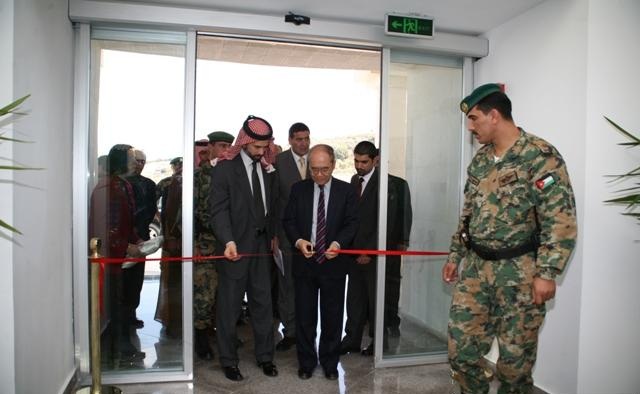
In a record time by any standards, just five years after the ground-breaking ceremony, the Jordanian Authorities officially handed over to SESAME the building that is to serve as its premises.
The Sandwich Training Educational Programme (STEP) aims at offering fellowship opportunities to PhD students in developing countries in the fields of physics and mathematics.
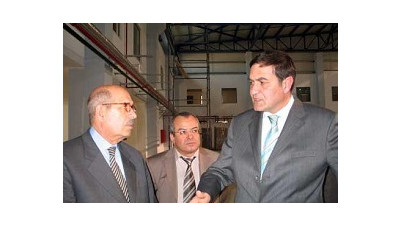
On 14 April 2007, on the occasion of his visit to Jordan, Mohamed ElBaradei, Director-General of the International Atomic Energy Agency (IAEA), visited SESAME’s building being constructed in Allan by the Authorities of Jordan.
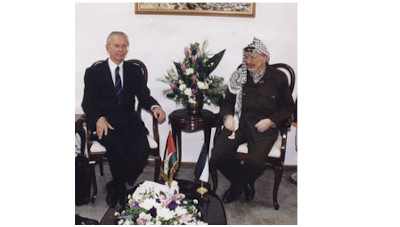
Can a recycled synchrotron become an oasis of peace in the Middle East?
By Mike Perricone.
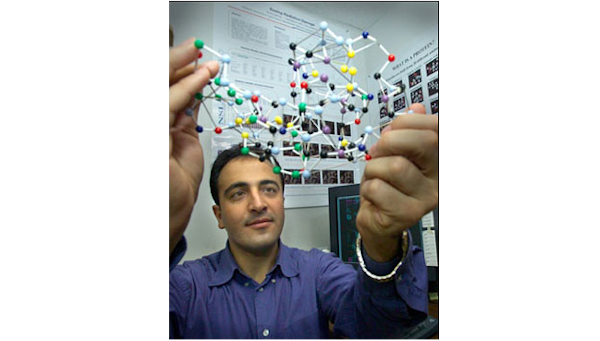
National Synchrotron Light Source visiting scientist Mehmet Aslantas has won the prestigious Margaret C. Etter Student Lecturer Award for a talk on his recent work: how to reduce the effects of radiation damage to protein crystals during synchrotron x-ray studies.
The need for an international synchrotron light source in the Middle East was recognized by eminent scientists such as the Pakistani Nobel Laureate Abdus Salam in the early 1980s and the CERN and Middle East based MESC (Middle East Scientific Cooperation) group headed by Sergio Fubini, a theoretician at CERN (European Organization for Nuclear Research).
Balqa- his majesty king Abdullah on Monday laid the cornerstone for the international center for synchrotron- light for experimental science applications in the middle east (SESAME) at Princess Rahma University College.
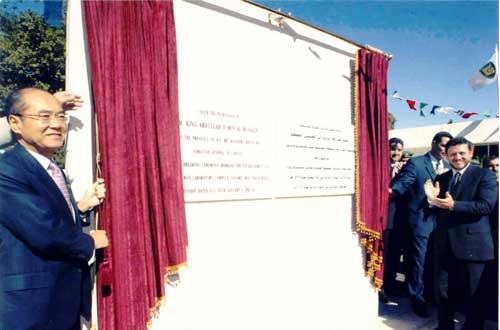
At a ground breaking ceremony at the SESAME site in Alaan Jordan on 6 January 2003 Koïchiro Matsuura, Director-General of UNESCO, announced that the SESAME project (Synchrotron-light for Experimental Science and Applications in the Middle East) is formally launched since he has received notice from seven Founding Members that they accept the statutes for the governance of the project.